


The ZKTeco SpeedFace V5L is a biometric time attendance and access control device designed to meet the needs of various industries. It combines facial recognition, fingerprint scanning, and RFID card reading to provide a secure and efficient solution for managing employee attendance and access. This guide will help you understand the key features, benefits, and considerations when choosing the SpeedFace V5L for your organisation.
Understanding the ZKTeco SpeedFace V5L: A zkteco speedface guide
The SpeedFace V5L is engineered to deliver fast and accurate biometric identification. It supports multiple verification methods, including facial recognition, fingerprint, and RFID cards. This versatility makes it suitable for environments where security and speed are critical.
Key features include:
Facial recognition technology: Uses infrared sensors to identify users even in low light conditions.
Fingerprint scanner: Provides an additional layer of security.
RFID card reader: Allows for contactless access.
Large user capacity: Supports up to 3,000 facial templates and 5,000 fingerprint templates.
High-speed processing: Identification in less than one second.
Multiple communication options: TCP/IP, Wi-Fi, and USB for flexible integration.
User-friendly interface: 4.3-inch touch screen for easy operation.
These features make the SpeedFace V5L a reliable choice for industries requiring robust access control and attendance management.
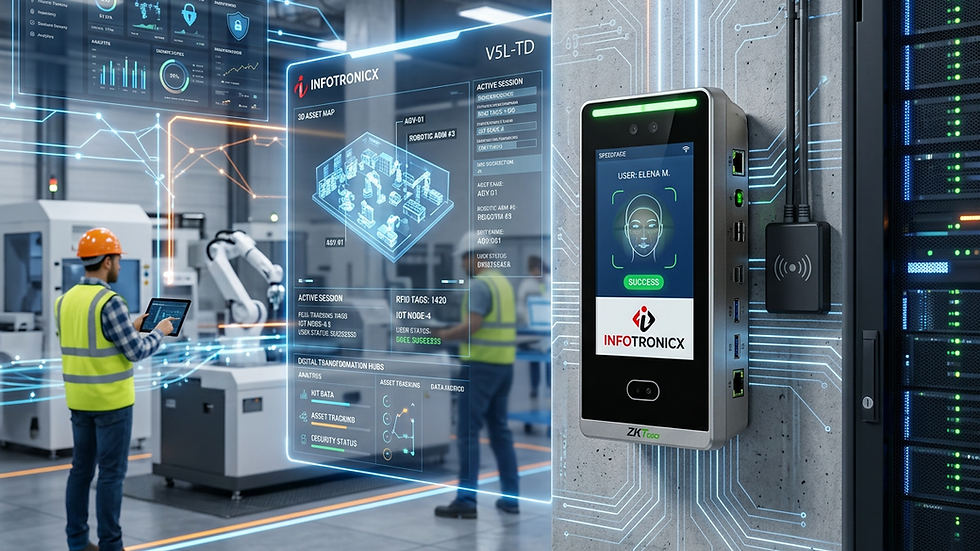
Key Benefits of Using the ZKTeco SpeedFace V5L
The SpeedFace V5L offers several advantages that can improve operational efficiency and security:
Enhanced Security: Combining facial recognition with fingerprint and RFID ensures multi-factor authentication.
Reduced Time Theft: Accurate attendance tracking prevents buddy punching and time fraud.
Improved User Experience: Fast recognition speeds reduce queues and waiting times.
Scalability: Suitable for small to large enterprises with high user capacity.
Integration Capabilities: Compatible with various third-party software and systems.
Durability: Designed for industrial environments with robust hardware.
For example, a pharmaceutical company can use the SpeedFace V5L to restrict access to sensitive areas while maintaining accurate attendance records for compliance purposes. Similarly, logistics operators can streamline employee check-ins to improve shift management.
Installation and Setup Considerations
Proper installation and setup are crucial to maximize the benefits of the SpeedFace V5L. Here are some practical recommendations:
Location Selection: Install the device at entry points with good lighting and minimal obstructions.
Mounting Height: Position the device at eye level for optimal facial recognition.
Network Configuration: Ensure stable TCP/IP or Wi-Fi connectivity for real-time data transmission.
User Enrollment: Register users’ facial templates, fingerprints, and RFID cards accurately.
Software Integration: Connect the device to your attendance or access control software for seamless management.
Regular Maintenance: Clean sensors and update firmware to maintain performance.
Following these steps will help avoid common issues such as recognition errors or connectivity problems.

Practical Applications in Industry
The SpeedFace V5L is well-suited for various sectors:
Industrial Manufacturing: Controls access to production floors and tracks shift attendance.
Pharmaceutical Companies: Secures labs and storage areas with multi-factor authentication.
Logistics and Warehousing: Manages large workforce attendance and access to restricted zones.
Enterprise IT Departments: Integrates with existing security systems for comprehensive control.
Educational Institutions: Monitors staff and student attendance efficiently.
System Integrators: Offers flexible deployment options for customized solutions.
Each application benefits from the device’s speed, accuracy, and ease of use, helping organisations maintain security and operational efficiency.
How to Choose the Right Model and Where to Buy
When selecting the SpeedFace V5L, consider the following:
User Capacity: Match the device’s capacity with your organisation’s size.
Verification Modes: Choose based on your security requirements.
Connectivity Options: Ensure compatibility with your network infrastructure.
Budget: Balance features with cost-effectiveness.
For those ready to purchase, it is advisable to buy zkteco speedface v5l online from trusted suppliers to ensure authenticity and warranty support. Online purchasing also offers convenience and access to customer reviews.
Maximising the Value of Your Investment
To get the most from the SpeedFace V5L:
Train staff on proper usage and troubleshooting.
Regularly update software and firmware.
Monitor device logs for unusual activity.
Integrate with other enterprise systems for comprehensive management.
Plan for scalability as your organisation grows.
These practices will extend the device’s lifespan and enhance security outcomes.
The ZKTeco SpeedFace V5L is a versatile and reliable biometric solution that meets the demands of modern enterprises. Its combination of advanced technology, ease of use, and robust features makes it a valuable asset for organisations aiming to improve security and operational efficiency. By understanding its capabilities and following best practices for installation and use, businesses can confidently implement this device to support their growth and digital transformation goals.